Ong Teng Cheong
An architect sees a city. An economist sees a spreadsheet. Singapore got its MRT because the architect won the argument.
I still remember the first time I rode the MRT as a kid.
The doors slid open. Air-conditioning hit you like walking into a different country. Everything was clean, fast, futuristic. For a generation of Singaporeans, it was the moment the city felt like it had arrived.
Here's what I didn't know until recently:
The MRT almost didn't happen. And the man who fought hardest for it wasn't an engineer or a transport planner. He was an architect.
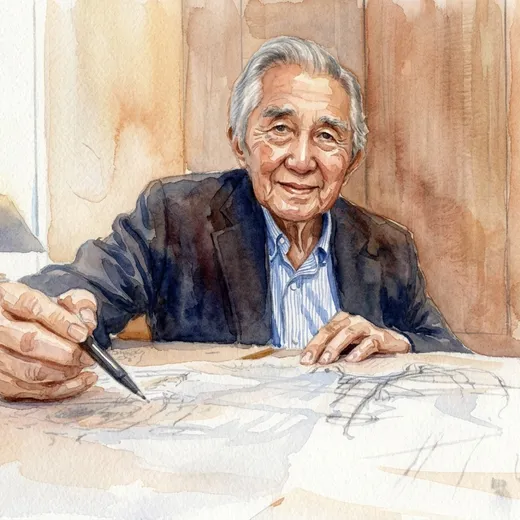
Ong Teng Cheong studied architecture in Adelaide, then urban planning at Liverpool. In 1967, he joined a UN team that helped draft Singapore's first long-term concept plan. That plan said something nobody wanted to hear: by 1992, a bus-only system would fail.
Ong didn't just read that finding. He helped write it.
When he became Minister for Communications in 1978, Singapore's most powerful finance minister came for his idea.
Dr Goh Keng Swee brought in Harvard economists. Their conclusion: an all-bus system would handle demand into the 1990s. Half the cost. No disruption. No risk.
But here's what the economists missed.
They modelled Singapore as a transport problem. How many passengers, how many routes, how many buses.
Ong saw it as an urban design problem. Transit doesn't just move people — it shapes where they live, where they work, where cities grow. An all-bus system would lock Singapore into low-density sprawl, competing for road space on an island with none to spare. A rail network would let you build a completely different city. Denser. Vertical. Organised around stations instead of highways.
The economists were solving for 1985. Ong was designing for 2025.
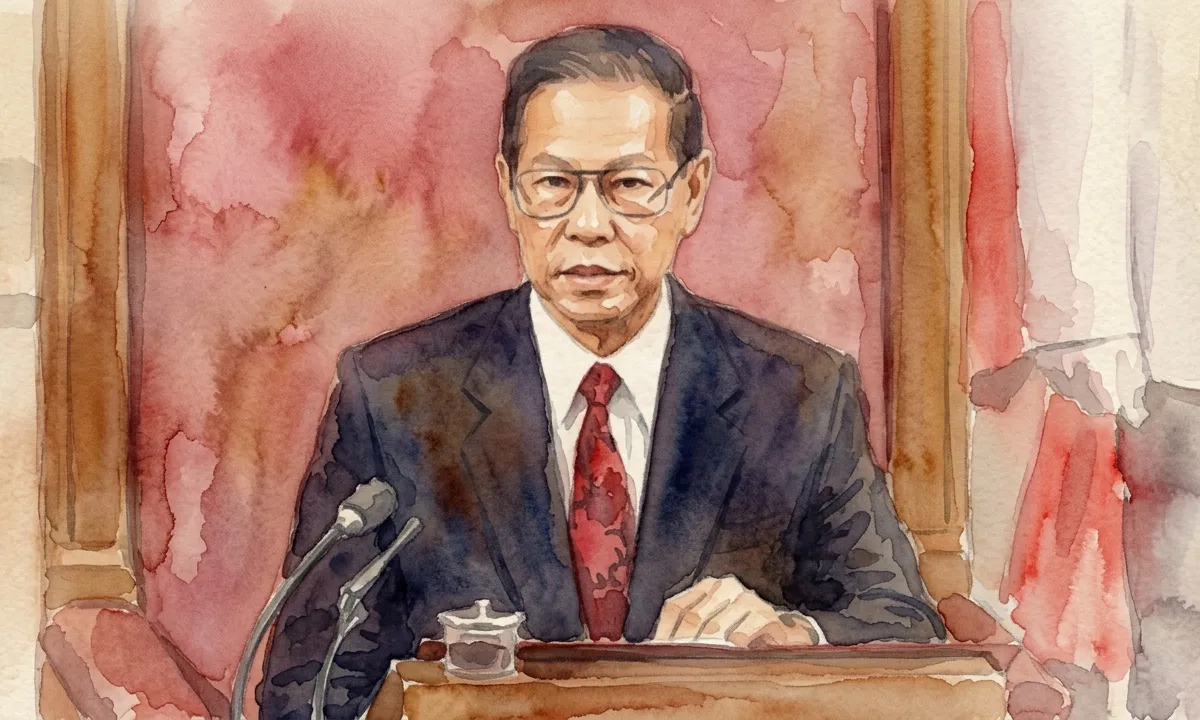
He pushed for a nationally televised debate — unheard of in Singapore at the time. Lee Kuan Yew presided. The argument came down to a question the spreadsheets couldn't answer: what kind of city does Singapore want to become?
Buses optimise for the city you have. Rail builds the city you need.
In May 1982, the government gave the green light. S$5 billion. Southeast Asia's first metro system.
When the first train pulled into Toa Payoh station on 7 November 1987, Ong was there. "This is like a 20-year affair from conception to delivery. Now the baby is born."
Today, 3.4 million people ride the MRT every day. Toa Payoh, Tampines, Jurong, Punggol — the entire city is built around those stations. Around the rail network an architect insisted on when the economists said it wasn't worth it.
Here's the thing that keeps coming back to me:
Everyone in that room was looking at the same data. Same forecasts. Same budget.
But the economists asked: "What's the cheapest way to move people?"
Ong asked: "What kind of city are we building?"
Same problem. Different question. And the question you ask determines the future you get.
Singapore didn't get the MRT because someone found a better answer. It got the MRT because an architect asked a better question.
What's a decision where the "cheapest solution" would have been the most expensive mistake?
This is the LinkedIn edit — written to fit inside 3,000 characters.