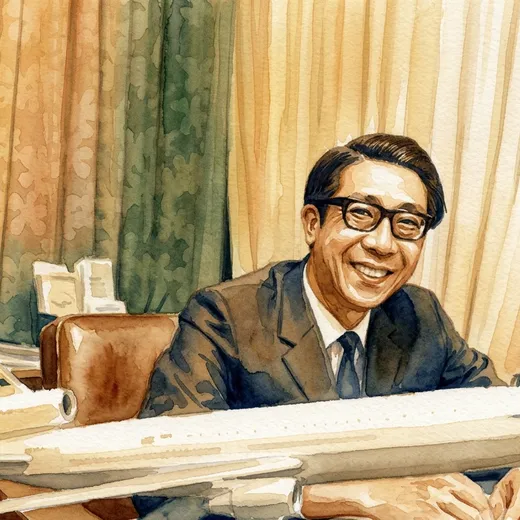
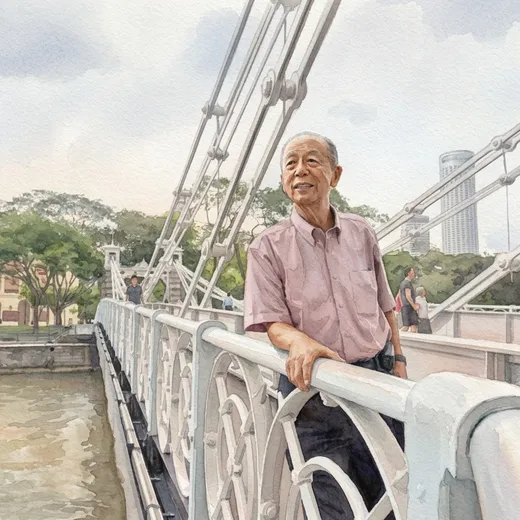
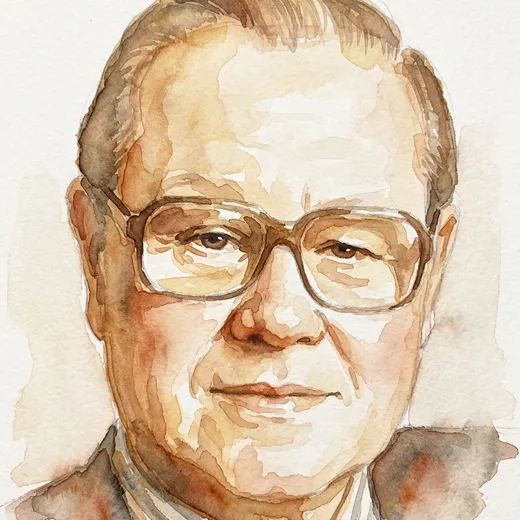
Liu Thai Ker
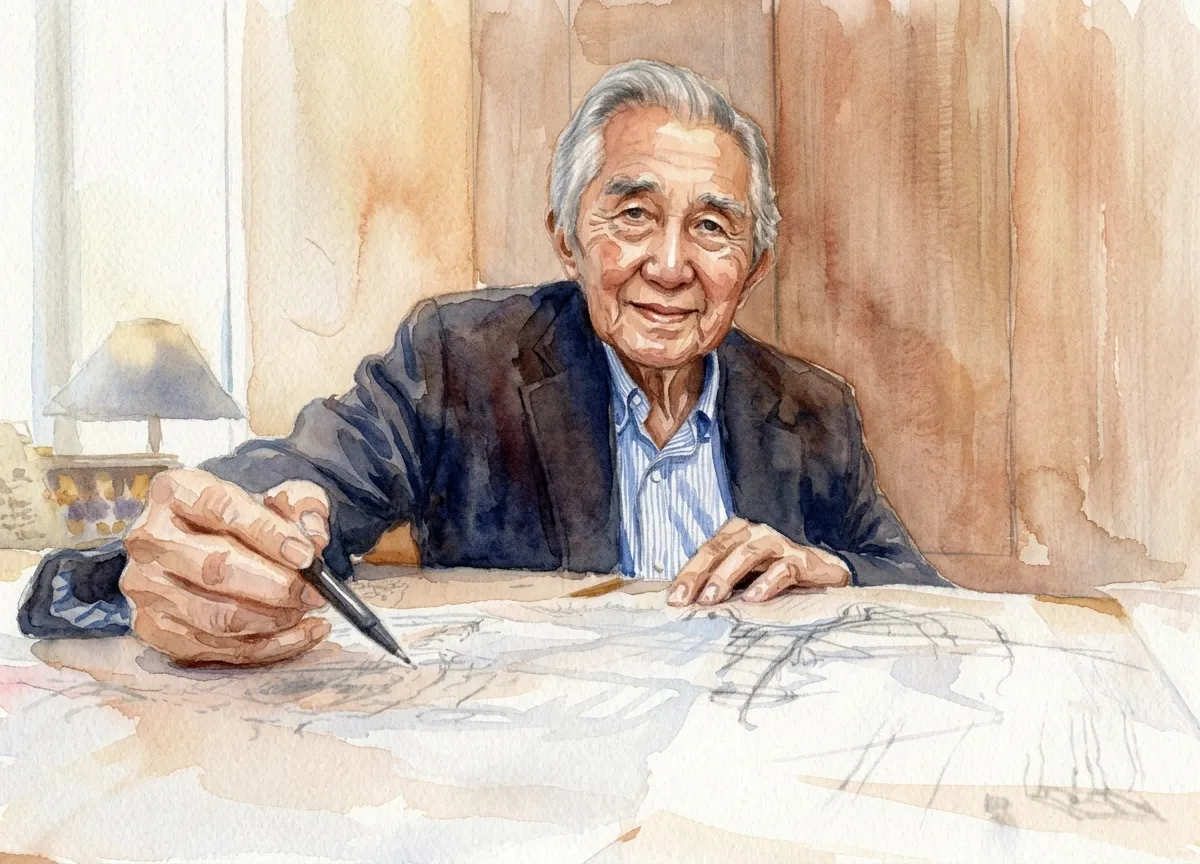
The best design isn't the one people notice. It's the one 5 million people never have to think about.
I grew up living in an HDB flat.
So does 80% of Singapore. The corridors feel right. The town centre is close enough. The park is where you'd expect it to be. We don't think about it.
Here's what I didn't know until recently:
One man designed almost all of it. 20 out of 24 HDB towns. Half a million housing units. His name was Liu Thai Ker. He died in January at 87. Almost everyone in Singapore lives inside something he built.
Liu grew up in what he called "abject poverty." His family couldn't afford mattresses — he slept on timber floors. His parents saved six months to buy him a bookshelf. Another six months for a bicycle.
His mother couldn't speak English. But she found him an architecture school in Australia within two days. Her reasoning: "Architecture is still related to art. But I hope you can pull our family out of this abject poverty."
He graduated top of his class. Master's at Yale. Then landed at I.M. Pei and Partners in New York — the most prestigious architecture firm in the world. Museums, skyscrapers, landmarks.
He stayed four years. Then he quit.
Not for another firm. He went home to design public housing. Corridors, void decks, town layouts that 5 million people would walk through without a second thought.
Here's what he did differently.
He treated HDB towns like cities, not housing projects. Each one self-contained — schools, markets, parks, transport. He consulted sociologists: 6-8 families per corridor was optimal for neighbours to actually know each other. He rejected Western models that concentrated poverty into towers of isolation.
When people criticized his blocks for looking plain, he had a response only a man who'd turned down I.M. Pei could get away with:
"To me, every HDB block is as beautiful as Miss Universe."
He wasn't being sarcastic. He meant it.
Because he'd redefined what "beautiful" meant. Beautiful meant a mother could walk her kid to school in ten minutes. An elderly uncle had a bench near his front door. You never had to think about whether the town worked — it just did.
He argued with Lee Kuan Yew. Regularly. LKY would walk housing estates with him, firing questions. Liu pushed back. And LKY let him — because Liu had a rule:
"The highest authority of Singapore is not the prime minister nor the president. The highest authority is rationality."
By 1985, virtually every Singaporean had proper housing. He later planned 50 cities across China.
Here's the thing that keeps coming back to me.
We celebrate architects who build landmarks. The ones who win awards and magazine covers. Liu did the opposite. He built things so well that nobody notices them at all.
The best design isn't the one people admire. It's the one 5 million people never have to think about.
Every morning, 80% of this country wakes up inside his work. And almost nobody knows his name.
What's something you use every day that works so well you've never thought about who designed it?
This is the LinkedIn edit — written to fit inside 3,000 characters.