Khong Guan Biscuits
The best founders don't have a fixed product. They have fixed adaptability.
They didn't plan to build a biscuit empire.
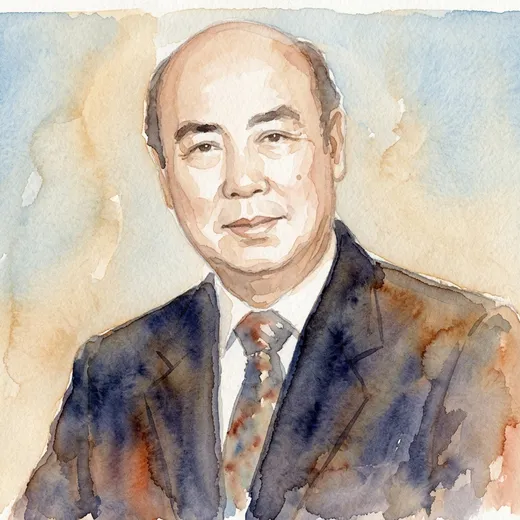
In 1937, two brothers left their village in Fujian, China. Chew Choo Keng was 21. His younger brother Chew Choo Han was still a teenager.
No money. No connections. Just a boat to Singapore.
They found work at a biscuit factory. Learned the craft. Saved everything.
By 1940, they'd scraped together enough to start their own small operation in Ipoh, Malaya. Forty employees. All former schoolmates from China.
Then the Japanese invaded.
They fled to a small town in Perak with nothing but their families.
At first, they tried to keep making biscuits by hand. But within months, the flour ran out. Then the sugar.
Most founders would've waited for supplies. Protected their identity as "biscuit makers."
The Chew brothers looked at what people actually needed.
Salt was scarce. So they collected seawater and learned to extract salt.
Soap had vanished from the markets. So they experimented with wood ash — batch after batch — until they figured out a formula that worked.
Then charcoal. Then coconut oil. Then rubber.
Four years. Five different products. None of them biscuits.
They weren't building a company. They were surviving. And survival meant making whatever the market desperately needed, not whatever they'd planned to make.
When the war ended in 1945, they sold everything. Returned to Singapore with about $50,000.
Their old factory? Destroyed.
But here's where it gets interesting.
The machinery from that factory — the same machines they'd once operated as workers — was being sold as scrap metal. War junk. Nobody wanted it.
Chew Choo Han saw something different.
He bought the scrap. Hauled it back. And with a mechanically obsessive mind, he rebuilt it piece by piece.
The conveyor system was broken beyond repair. So he rigged up bicycle chains to move biscuits through a brick oven he'd built by hand.
In 1947, Khong Guan Biscuit Factory opened at 18 Howard Road, Singapore.
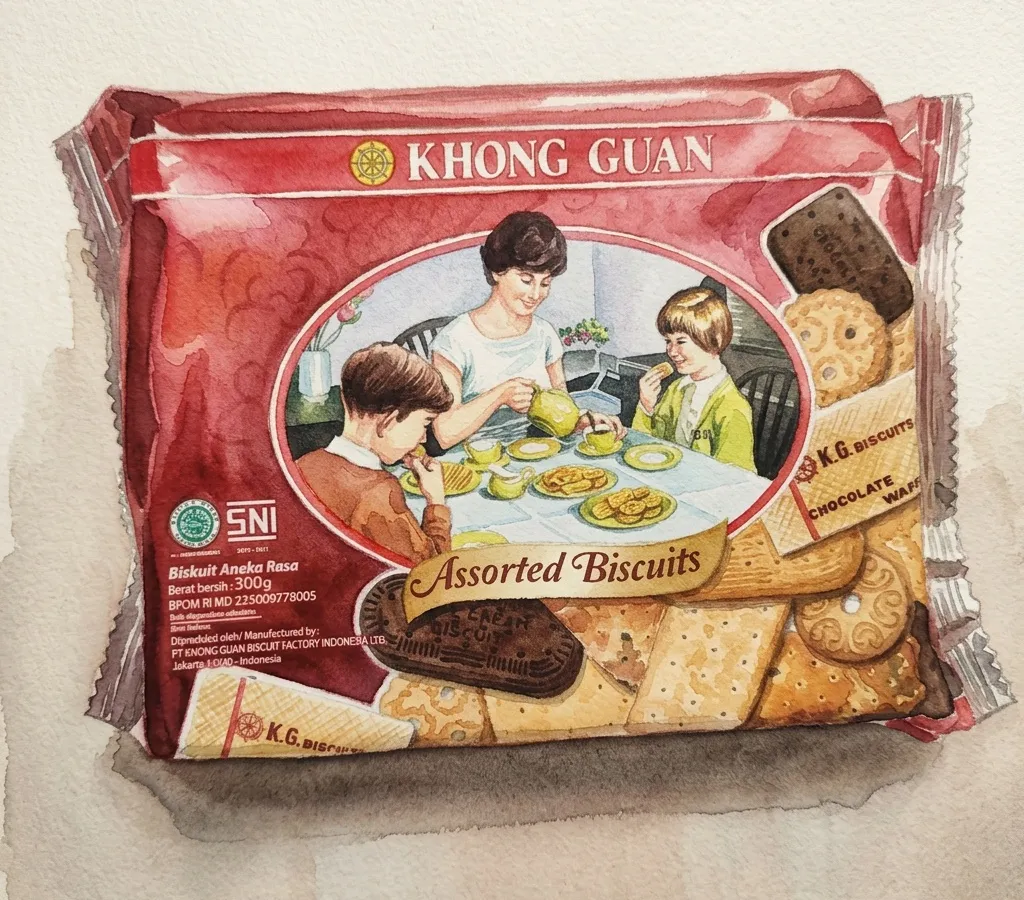
That "junk" now exports to 40+ countries. Commands 70% market share in Indonesia. The red tin has been in your grandmother's house, the nasi lemak stall, and probably storing something random in your kitchen right now.
Here's what I keep thinking about:
We celebrate founders who "stay true to their vision." Who grind for years on one idea. Who refuse to pivot because they believe.
The Chew brothers had no vision.
They had fixed adaptability.
Salt. Soap. Charcoal. Coconut oil. Scrap metal. Bicycle chains. Biscuits.
The product changed six times before biscuits stuck.
The willingness to make whatever the market needed — with whatever was available — never changed once.
That's not a lack of vision.
That's the only vision that survives a world war, a destroyed factory, and 77 years of business.
This is the LinkedIn edit — written to fit inside 3,000 characters.