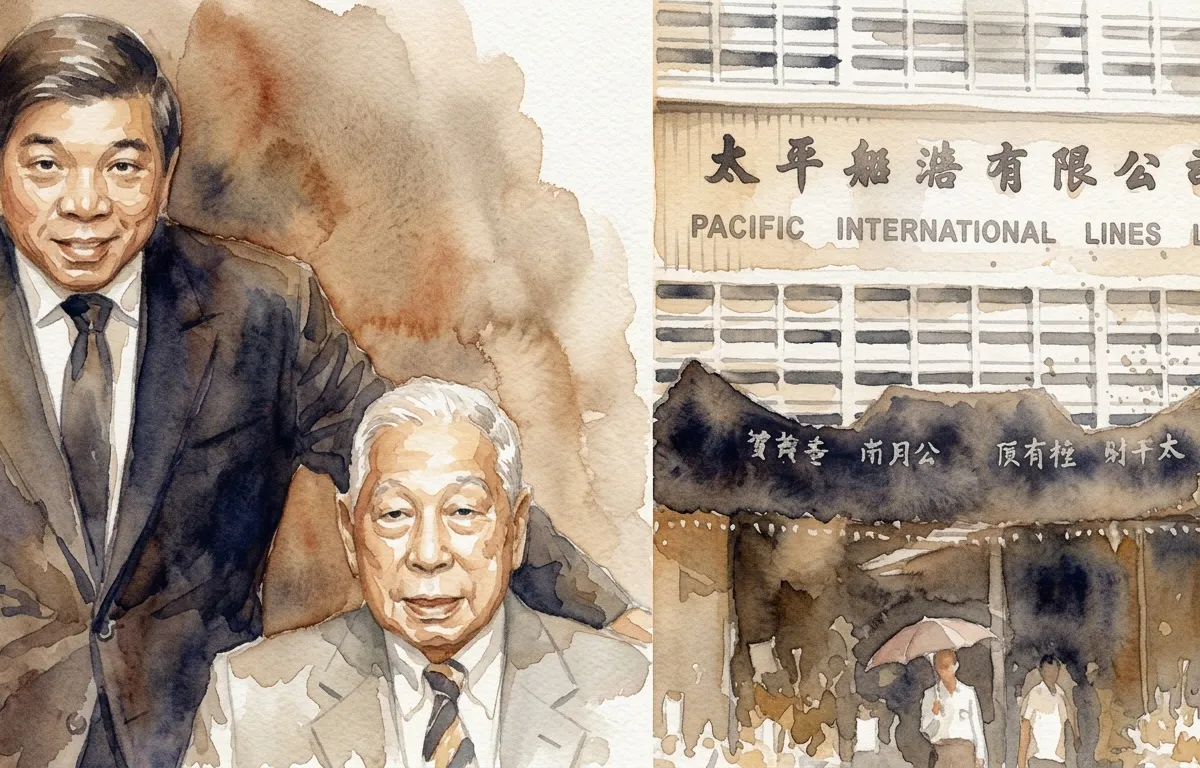
Chang Yun Chung
It's never too late — and the route everyone else avoids is usually the one that's open.
There's a woman I keep thinking about.
In 1944, in Japanese-occupied Malaya, she walked into the office of the local Kempeitai chief and handed him everything she owned. Every possession she had left. Not for money — to buy back her son, who the Japanese were about to execute.
Her son's name was Chang Yun Chung.
Here's the part nobody talks about.
He'd fled to Singapore as a refugee in 1937, when Japan invaded China. His father had gone ahead of the family, and was later killed by the Japanese. Chang hid in the rubber plantations outside Malacca. Twice — in 1942, then again in 1944 — he was arrested for smuggling food and medicine to the anti-Japanese resistance.
The second time, they were going to kill him.
His mother's savings changed that sentence to captivity. He sat as a prisoner until Japan surrendered in 1945, then walked out of the war with nothing. No money. No business. A father in the ground and a debt to his mother he could never repay.
Think about where that leaves a man.
But here's what gets me.
He didn't start his own company until 1967. He was 48. Two decades working inside other people's shipping firms, and then — at an age when most men are counting down to retirement — he started over. Pacific International Lines. Two second-hand ships. That was it.
And he made a strange choice.
The biggest lines in the world were fighting over the rich routes: the Atlantic, the Pacific, the glamorous lanes. Chang pointed his two old ships at the places nobody wanted. China. The Persian Gulf. East Africa. Poor, risky, unfashionable. He became one of the first foreign shipping lines to sail into Communist China.
Everyone else saw dead ends. He saw open water.
Then those economies grew up. And he owned the roads in.
From two ships to a top-10 container line on Earth. In 2017, at 98, he became the oldest billionaire alive. At 100, he was still turning up at the office almost every day. Asked why he wouldn't retire: "It's my habit. I cannot stay at home, (I'd get) very, very bored."
His mother bought him a life in 1944. He spent the rest of it proving the price was worth paying — and he didn't even begin the real work until he was nearly 50.
It's never too late. And the route everyone else avoids is usually the one that's wide open.
What's something you think you've started too late to ever be great at?
This is the LinkedIn edit — written to fit inside 3,000 characters.