2C2P / Aung Kyaw Moe
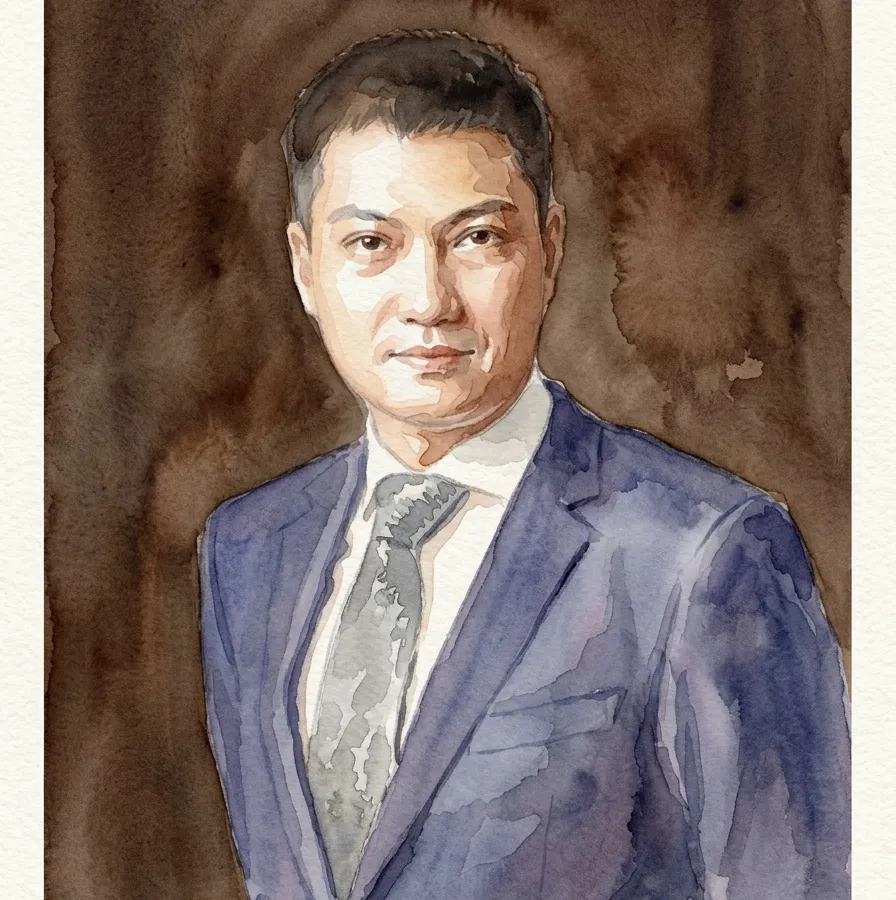
The people the system locks out often see it most clearly — so they go build the door.
There's a founder story I keep coming back to.
Every time you tap a card or pay online across Southeast Asia, there's a decent chance the payment runs through rails built by a man his own system once locked out.
His name is Aung Kyaw Moe. He grew up in Yangon, Myanmar. By his own account, he learned to code without even owning a computer — writing his programs out by hand, on paper — while working nights as a hotel butler for a few dollars a month.
Here's the moment that changed everything.
In 1999, he traveled to Thailand for a UK student-visa interview. The visa was denied. A Burmese passport, the wrong political moment, and just like that he was stuck — in a country that wasn't his, unable to go where he'd planned, too proud to go home.
In his words: "The visa was denied. I was too shy to go back home, looked for a job in Bangkok... and the rest is history."
So he stayed. And in 2003, he started a company — to build mobile games, a market that barely existed yet.
It went nowhere as a games company. But then a friend asked him to build card-security software for a Thai bank. He did the job for free. That favour became a reference. The reference became more bank clients. And the games company quietly turned into a payments company.
That company was 2C2P. He moved its headquarters to Singapore in 2007.
Today it processes billions, supports around 250 payment methods across the region, and in 2022 Ant Group — Alibaba's fintech arm — took a majority stake, later valued at over US$590 million.
A man who was denied entry to the formal system ended up building the plumbing the formal system now runs on.
Here's the thing that stays with me.
We treat exclusion as pure disadvantage. The closed door. The credential you never got. The tool you couldn't afford.
But the person locked out often sees the system more clearly than the people comfortably inside it — because they've felt exactly where it fails.
He didn't get through the door. So he built one. And now millions pass through it.
Where have you seen someone shut out of a system end up redesigning it?
This is the LinkedIn edit — written to fit inside 3,000 characters.