Texas Instruments Singapore
The best sales pitch isn't a promise. It's proof you already delivered.
There's a story about how Singapore became a manufacturing economy that I can't stop thinking about.
1968. Texas Instruments needed a factory in Asia. Not in six months. Not after a feasibility study. Now.
Every country they visited said the same thing: "These things take time."
Here's what I didn't know until recently:
Singapore had no semiconductor industry. No trained workers. No chip factories. On paper, the worst option on the list.
But the EDB didn't flinch. Chan Chin Bock and his team told TI: "Sign today. You'll be in production in 50 days."
Texas Instruments signed. Now Singapore had to deliver.
Here's what they actually did.
They found a 49,000 sq ft building at Kallang Basin. Tenants were still in it. They relocated every one, leased the building from JTC, and ripped out the guts. Power supply redesigned. Water systems rebuilt. Dust control installed from scratch. Semiconductor manufacturing needs near-sterile conditions. This was a regular industrial building on reclaimed swampland. They made it work.
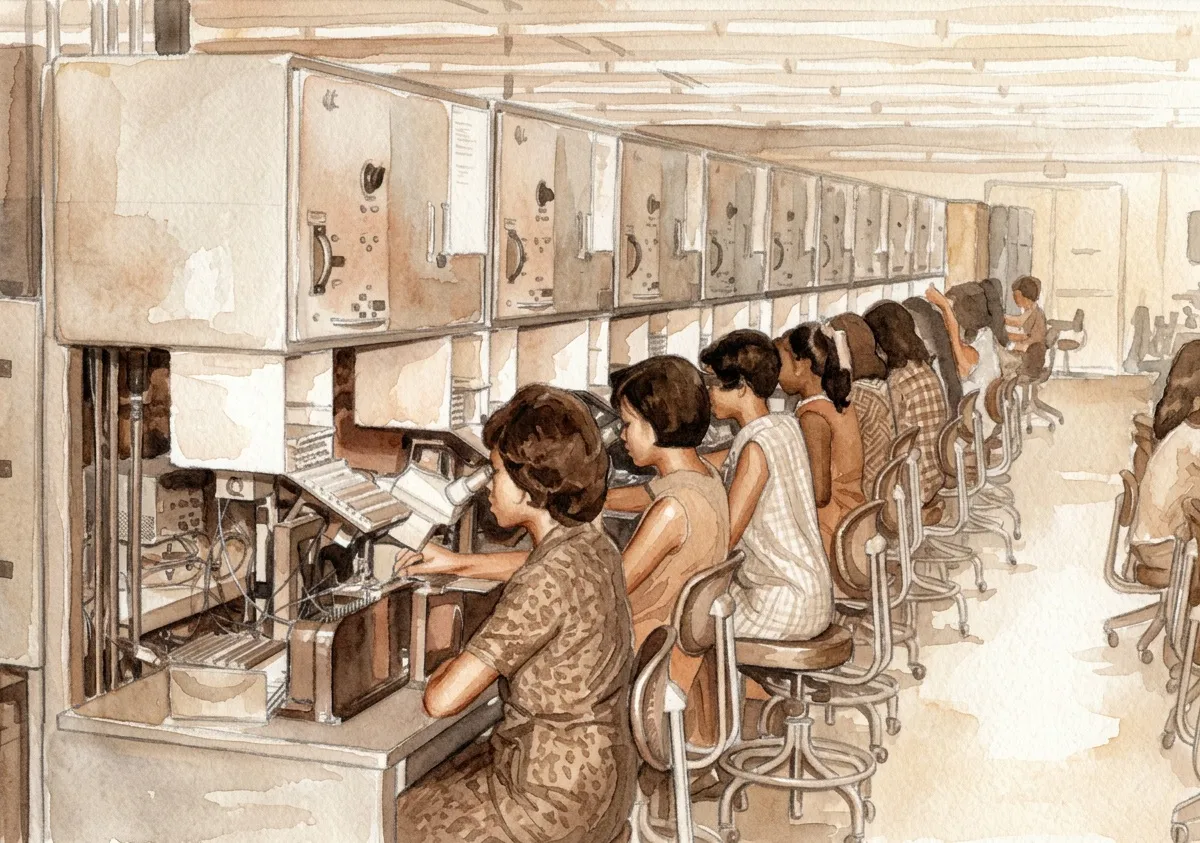
While construction crews tore through the building around the clock, 1,400 workers — most of them women with zero electronics experience — were sent to the National Productivity Centre in Jurong. Mock assembly lines. Hands on dummy equipment, learning to handle components smaller than a grain of rice. So when the factory doors opened, zero ramp-up needed.
Meanwhile, EDB officers physically walked permit documents desk to desk across government agencies. Approvals that normally took months happened in hours.
December 1968: deal signed. January 1969: first semiconductors off the line.
Less than 50 days. Empty building to functioning factory.
The Straits Times called it the "50-Day Wonder."
But here's where it gets interesting.
The factory wasn't the real win. Singapore built something more valuable than a semiconductor plant.
They built a reference story.
For the next decade, every time the EDB sat down with a CEO, they didn't need a pitch deck. They pointed at the TI factory: "We did it for them in 50 days. What can we do for you?"
National Semiconductor came next. Then Hewlett-Packard. Then dozens more. Lee Kuan Yew later called TI "the country's big break."
Here's the thing:
Most people think you win deals with better incentives. Better terms. A shinier pitch deck.
Singapore didn't out-promise anyone. They out-delivered everyone.
The best sales pitch isn't a promise. It's proof you already delivered.
What's the "50-day wonder" in your business — the one project you point to when someone asks why they should trust you?
This is the LinkedIn edit — written to fit inside 3,000 characters.
This ran on LinkedIn on 2 March 2026. See the original post · 145 reactions