Half a Billion Dollars Left in a Week. None of It Was Missing.
You have paid a bill at an AXS machine. Utilities. School fees. A traffic fine.
In February 2025 that changed.
A Singapore fintech started paying you air miles for it.
Three weeks later they switched it off.
What followed took half a billion dollars out of the company. About 40% of everything it held.
Nobody lost their money.
Here's what I didn't know.
The man it happened to had spent his career building the opposite thing.
Walter de Oude is a South African actuary. In Singapore since 2000.
He ran HSBC's insurance business here for seven years. Chief actuary. Head of products. Deputy CEO. Then CEO.
Then he was offered more. He left.
Three years asking MAS for a licence.
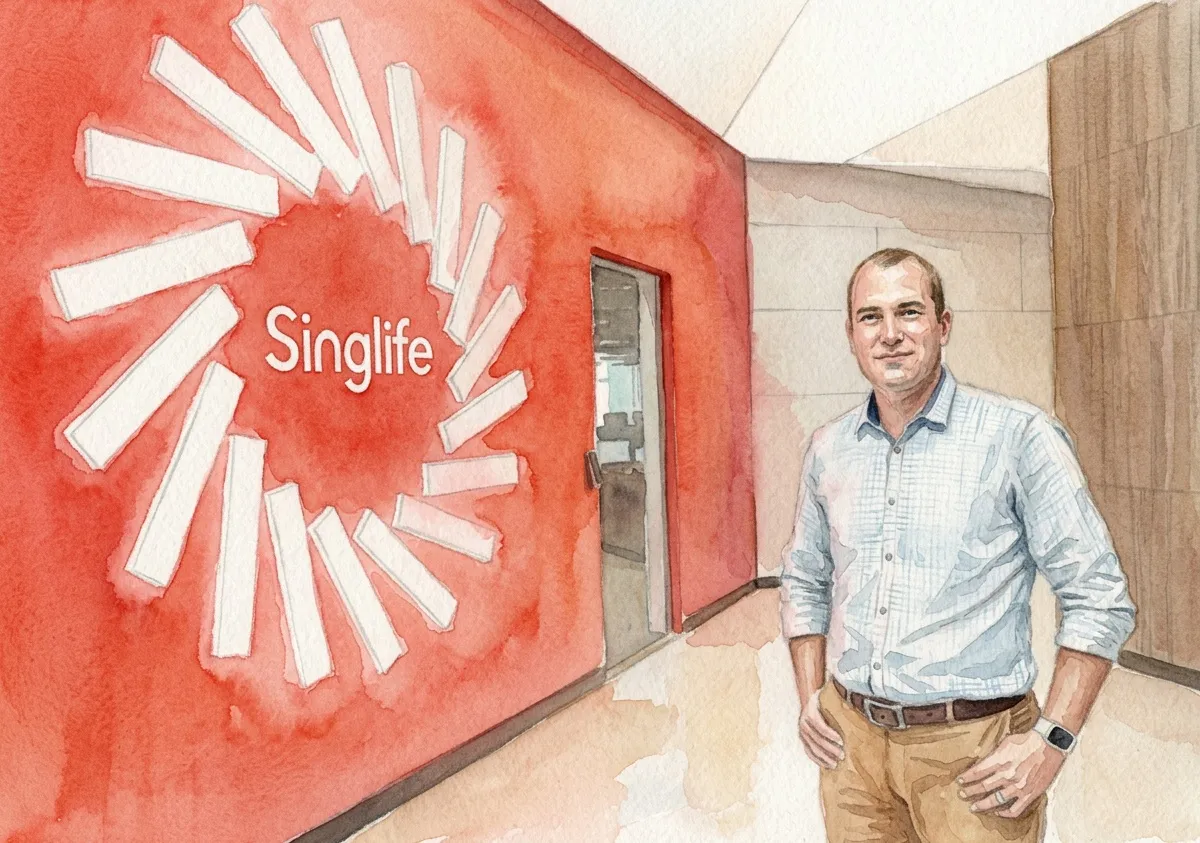
In 2017 he got one. Singapore Life. The first new local life insurer licensed here since 1970.
Forty-seven years.
He had raised US$50 million before the licence came through. Betting on a permission he didn't have yet.
In March 2024, Sumitomo Life bought the whole thing. S$4.6 billion.
He had walked away the year before. Kept no stake.
Four months later: Chocolate Finance.
The pitch was plain. Park your cash. Target 3.3% on the first S$20,000. Three per cent on the next S$30,000.
It is not a bank. It holds a capital markets services licence.
Your money buys units in fixed-income funds. An independent custodian holds them. No deposit insurance.
The clever part was never the yield.
It had a name. The Chocolate Liquidity Programme.
Take out up to S$20,000 in a day. It lands instantly.
Behind the scenes, selling those units takes three to six business days.
Chocolate fronted the gap. Out of its own pocket.
That was the product. Not the interest. The speed.
By February 2025: over 60,000 customers. Nearly a billion Singapore dollars.
Then came the miles.
On 11 February, Chocolate partnered with HeyMax. Two Max Miles per dollar on virtually everything. Charities. Hospitals. School fees. Insurance premiums.
And AXS bills.
Nobody had seen that before.
Capped at the first S$1,000 of spend a month. Above that, the rate dropped to 0.4.
Singaporeans read the terms.
## Then they switched it off
De Oude's word for what came back was "absolutely huge."
Absolutely huge payments. Pouring through AXS.
The problem was the economics. On an AXS bill there is no merchant fee to split. Chocolate was buying those miles and getting nothing back.
So on 5 March, the card stopped working at AXS. No notice.
Why no notice? Warning people, he said later, would only "exacerbate the utilisation so much more."
Fair enough. Unpopular, but defensible.
Then somebody wrote the FAQ.
## The sentence on the help page
Here is what it said.
"AXS is no longer accepting the Chocolate Debit Card as a credit card payment mechanism."
Read that again.
The decision sits with AXS.
AXS did not agree. A spokesperson said otherwise.
"The removal of Chocolate Visa Card as a payment option on AXS was made at the request of Chocolate Finance."
Chocolate rewrote the page. Within hours.
The new version talked about reviewing spend categories. For long-term sustainability.
De Oude later said the first version had "mistakenly implied" that AXS pulled the plug.
By then it was out.
On Reddit, nobody was arguing about miles anymore.
Customers rejected the idea that they had gamed anything. They had used the card exactly as advertised. Now they were being penalised for it.
Then the finance influencers posted. They were pulling out.
On 9 March, Chocolate suspended instant withdrawals. Back at six, the notice said.
It was not.
Withdrawals moved to three to ten business days. Card spending was capped at S$250. Wallet top-ups were blocked.
Between 10 and 18 March, more than S$500 million went out.
De Oude, six months on, called it half a billion in three days. The accounts written at the time say a week. Nobody has reconciled the two.
Carma Asia measured the conversation on X and Reddit. 42.3% negative. 6.1% positive.
Wu Yin Ying of Ninja Van had a phrase for it. A textbook example of how not to handle a crisis.
Daniel Rabetti, a finance professor at NUS, called it a digital-era bank run. The backlog, he wrote, was "reinforcing fears that Chocolate Finance was facing insolvency."
Fears. Not findings.
Then on 12 March, MAS said its piece.
Two sentences. Both worth reading exactly.
It said it "continues to engage Chocolate Finance ... to ensure that all customer withdrawals will be met in an orderly fashion."
Then it restated the rule. "Customer monies must remain intact and cannot be used to meet the liabilities of the digital advisor at all times."
Chocolate Finance and its custodian had confirmed as much.
That's the whole of it. A rule and a confirmation. Not a hug.
## He was in Switzerland
That is where he was when the withdrawals started.
He flew back. Straight from the airport to a live CNA interview. No script.
His line on camera: "what's absolutely clear here is that all of our customers' monies is safe."
Same day. A note on LinkedIn.
"But it happened so fast we communicated this change poorly."
"A withdrawal spike can deplete our liquidity buffers, requiring a temporary pause."
"At no point is customer money at risk."
And then this.
"Offering a freebie that you know to be unsustainable is not a great way to build long term trust."
Then seven words. "Mistakes happen - own them, learn, and improve."
Notice what he did not apologise for.
Not the decision to pull AXS.
He defended that on television. Most people accepted it.
He apologised for the description.
The PR industry noticed. Manisha Seewal of Redhill said the one thing he did really well was taking full ownership. Oliver Ellerton called the statement honest, well structured and detailed.
Every withdrawal request from those nine days was paid.
July 2025. US$15 million closed.
Nikko Asset Management led it. Peak XV came back in. So did Prosus and Saison.
So did he. With his own money.
Assets were still under S$900 million that month. Below where they had started.
By February 2026: nearly S$1.1 billion. Over 100,000 customers. More than before the run.
Still losing money. S$5.3 million of revenue. A S$6.55 million loss. Sixteen months.
Profitability is aimed at 2027. Hong Kong is approved.
Instant withdrawals never came back in Singapore. Ninety per cent now clear within thirty hours. Fast. Not the same promise.
The miles were cut to one per dollar. Bill payments capped at a hundred a month.
His own verdict, delivered without embarrassment:
"It was probably the biggest PR campaign in history. Everyone in Singapore knew about us after that. In the end, it gave us reach that money couldn't buy."
He has a theory about where that reach came from. It is not television.
"Reddit is probably the most overlooked PR platform in the world."
He also said this. "Customers can smell when you're hiding."
The lesson is small.
The unpopular decision was survivable. He made it. He explained it. He kept the business.
What cost him was one sentence on a help page. A sentence that let somebody else hold the bag for a day.
Own the call in the same breath you announce it. The gap between the two is where trust drains out.
Think about the last unpopular call you had to make. How long was the gap between deciding it and putting your name on it?