Calbee / Takashi Matsuo
The most beloved snack in Japan was born from the worst day in human history.
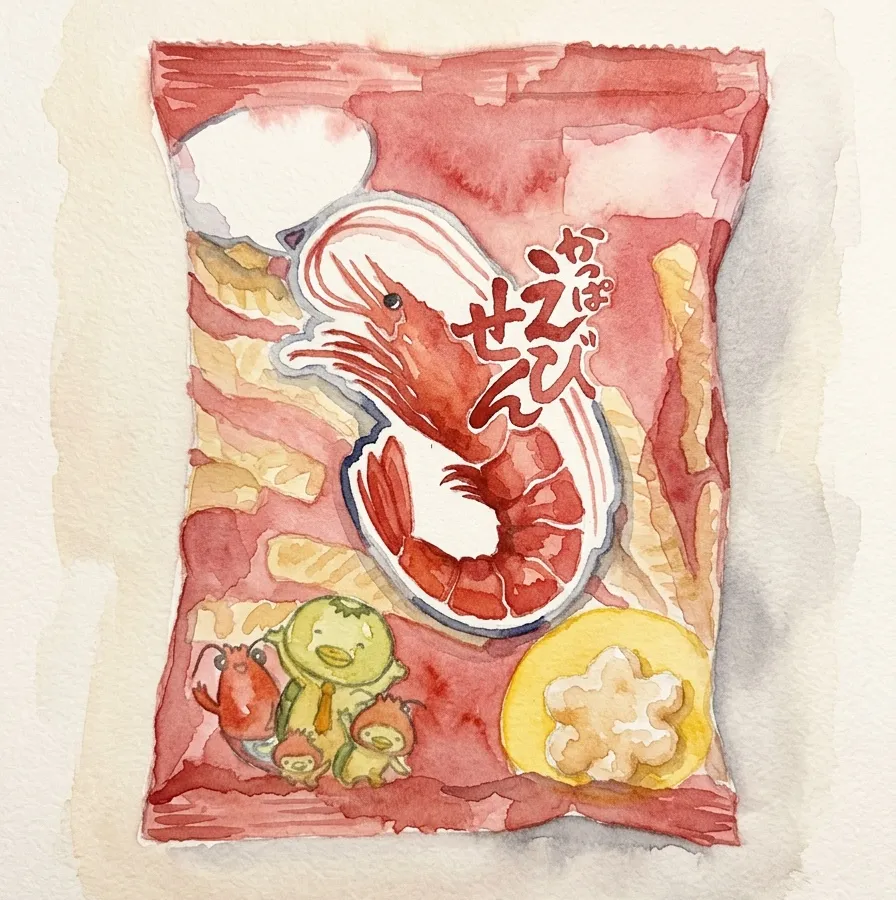
If you grew up anywhere in Asia, you know the green bag. Kappa Ebisen. Shrimp chips. The snack that tastes like someone deep-fried a memory.
Here's what I didn't know until recently:
The guy who invented it named his company after vitamins for starving people.
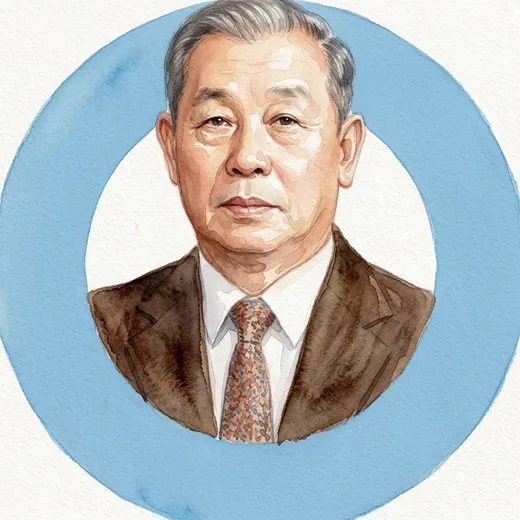
Takashi Matsuo was born in 1912 in Hiroshima. Took over his family's failing rice bran business at 18. During WWII, he kept people alive by turning waste — rice germ, sweet potatoes, wild plants — into dumplings. Not a business. A survival operation.
Then on August 6, 1945, his hometown was leveled.
By 1949, Hiroshima was still rubble. Survivors lived in shacks built from debris. Orphans. Elderly. Repatriated soldiers with nowhere to go. Beriberi and malnutrition were everywhere.
Most people saw devastation. Matsuo saw a question: how do you get nutrients into people who can barely afford to eat?
His answer: candy.
April 1949, he founded a food company in Ujina, Hiroshima. First product was a caramel made from mixed grains and yam starch, fortified with calcium and vitamin B1. Nutrition disguised as a treat.
He named the company by combining what mattered most: "Cal" for calcium. "Bee" for B1.
Calbee. The mission is in the name.
But here's where it gets personal.
As a kid, Matsuo's favourite thing in the world was catching shrimp in the neighbourhood river. His mother would turn his catch into tempura. That was the treat. That was the good day.
In 1964, nineteen years after the bomb, he launched Kappa Ebisen. Whole shrimp minced into wheat flour dough. Cheap ingredients, expensive memory. A snack built from what a boy remembered before the world broke.
By 1969, the jingle "Yamerarenai, tomaranai" — "Can't stop, can't quit" — became one of the most recognized phrases in Japanese advertising history.
Today Calbee does $2.2 billion in revenue. Over 70% of Japan's potato chip market. Sold across Asia — Singapore, Malaysia, Thailand, Korea.
But the thing that stays with me isn't the numbers.
It's that a man who watched his city turn to ash didn't start with a business plan. He started with a question: what do people need right now? And the answer kept changing. First it was calories. Then it was nutrition. Then it was joy.
The green bag in the convenience store didn't come from a boardroom.
It came from a boy catching shrimp in a river, and a man rebuilding from nothing.
What's a snack from your childhood that still shows up in your life today?
This is the LinkedIn edit — written to fit inside 3,000 characters.