Forrest Li / Sea
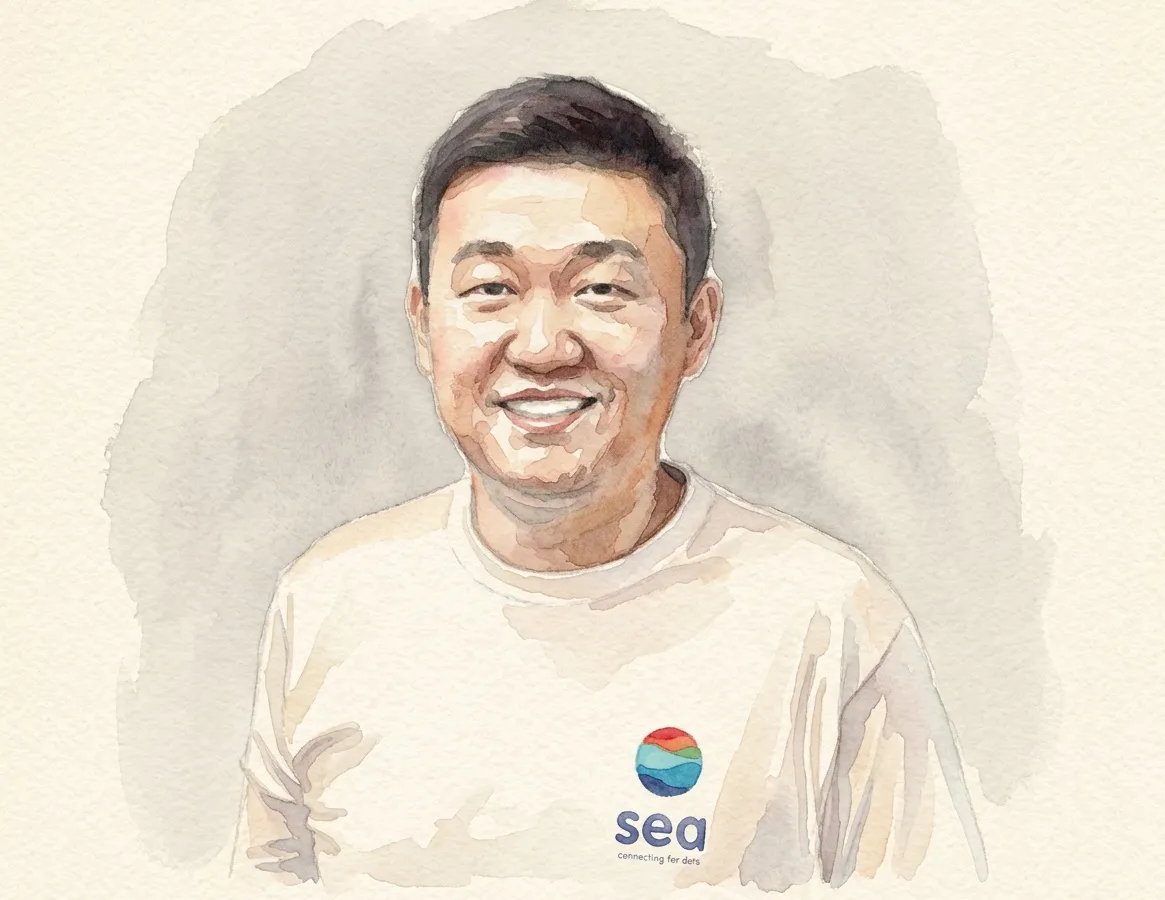
He replaced luxury tea with Lipton and two-ply toilet paper with single-ply. That's how you save a $50 billion company.
In 2021, Forrest Li was the richest man in Singapore.
Sea Limited — Shopee, Garena, SeaMoney — hit a $200 billion market cap. Analysts were asking if it could reach a trillion. Shopee was expanding into Brazil, Mexico, France, Poland. Free Fire had 40 million monthly players in India alone.
Twelve months later, 90% of that was gone.
India banned Free Fire overnight. Tencent dumped $3 billion in Sea shares. The stock crashed from $367 to under $40. Li personally lost $17 billion. Not a typo. Seventeen billion dollars.
Media ran obituaries. "What's left of Sea Limited?" Competitors circled.
Here's what Forrest Li did next.
He was in bed with COVID. Fever. Cough. Could barely sit up. He propped himself on a pillow and wrote the memo that would save his company.
"This is not a quickly passing storm," he wrote. "The only way for us to free ourselves from relying on external capital is to become self-sufficient."
Then he announced that he and top management would take zero salary until it worked.
The former richest man in Singapore. Zero pay.
But the memo was just words. What followed was the part nobody expected.
He pulled Shopee out of France, Spain, India, Argentina, Chile, Colombia. Six countries gone. Laid off 7,500 people — 10% of the company. Banned business-class flights for everyone. Capped hotel spending at $150 a night. Capped meals at $30 a day.
Then the details got absurd.
Office snacks? Gone. The luxury TWG tea in the pantry? Replaced with Lipton. And in some offices, two-ply toilet paper was swapped for single-ply. Bloomberg actually ran the headline: "Sea's Path to Profit Paved With Layoffs, Single-Ply Toilet Paper."
Every competitor thought he was dying.
He was shedding dead weight.
In 2023, Sea posted its first profitable year ever. All three businesses — gaming, e-commerce, fintech — turned positive. In 2024: $16.8 billion in revenue. Shopee crossed $100 billion in gross merchandise value for the first time. Net income: $448 million.
From $200 billion to near-death to profitable — in under three years.
Here's what stays with me: everyone in tech talks about "growth at all costs." Forrest Li proved there's a moment when the bravest thing a founder can do is stop growing.
Pull back. Shrink. Replace the tea. Replace the toilet paper. Take zero salary. And bet that survival is more impressive than expansion.
What's something in your business you're spending on out of habit, not necessity?
This is the LinkedIn edit — written to fit inside 3,000 characters.