Azaduz Zaman
A Bangladeshi apprentice of Louis Kahn designed Singapore's most "local" spaces.
Next time you're at a hawker centre, look up.
Not at the food. At the ceiling. The way air moves through the space. The way you can sit across from a stranger and not feel crowded. Someone designed that. And there's a good chance it was a Bangladeshi immigrant.
His name is Mohd. Asaduz Zaman. Born in what was then East Pakistan. One of 13 children. Son of a teacher and a housewife.
Here's what I didn't know until recently:
Before he ever set foot in Singapore, Zaman apprenticed under Louis Kahn — the architect behind Bangladesh's National Assembly Building in Dhaka, one of the greatest buildings of the 20th century.
Then in 1974, he joined HDB. Not a glamorous private firm. The Housing Development Board. And he stayed for over 40 years.
Here's where it gets interesting.
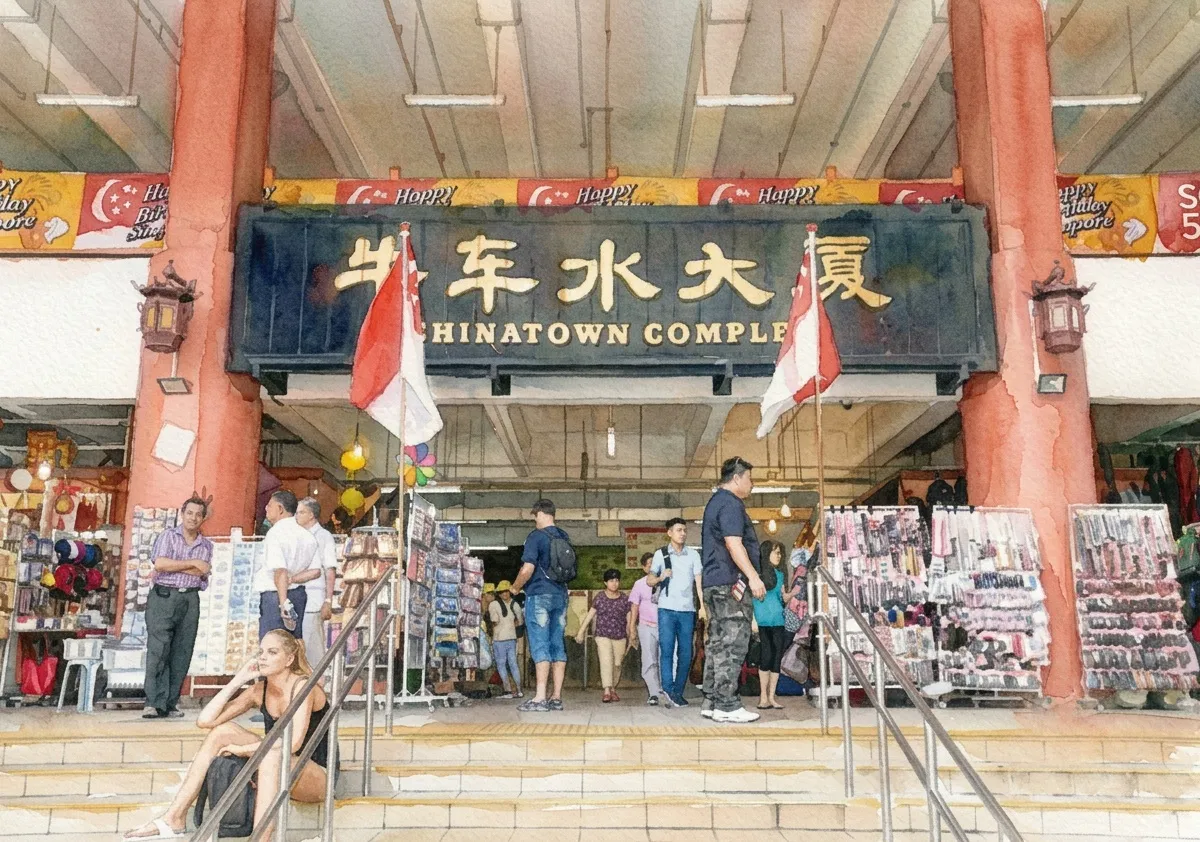
In 1983, Zaman designed Chinatown Complex. 335 Smith Street. 260-plus cooked food stalls. Singapore's largest hawker centre. The place where Hawker Chan would later earn a Michelin star selling chicken rice for under $3. A Bangladeshi architect designed the most "Chinatown" building in Chinatown.
But the project that shows who Zaman really is came later: Geylang Serai Market, completed in 2009.
He raised the ceiling to twice the height of earlier hawker centres — not for aesthetics, but so heat and smoke would rise instead of sitting on your head. Then he modelled the structure on the traditional Malay kampung house. The bumbung panjang, the long roof. Metal beams customized to look like timber, recreating the scale of a wooden structure in steel.
Think about that. A Bangladeshi Muslim architect paying tribute to Malay Muslim architectural heritage. In a building most Singaporeans would describe as "very local."
He has this line about tables I love: "If a large table has no gaps, people treat it as one table. Even a small gap makes people see two different tables." That's the kind of invisible thinking that shapes how strangers share space.
Zaman is about 81 now. Forty-plus years designing mosques, markets, sports complexes, HDB estates. The spaces where everyday life actually happens.
The most "Singaporean" spaces in Singapore were designed by someone from Bangladesh. And the thing is, that's the most Singaporean story there is.
What's a public space you use all the time without ever thinking about who designed it?
This is the LinkedIn edit — written to fit inside 3,000 characters.